

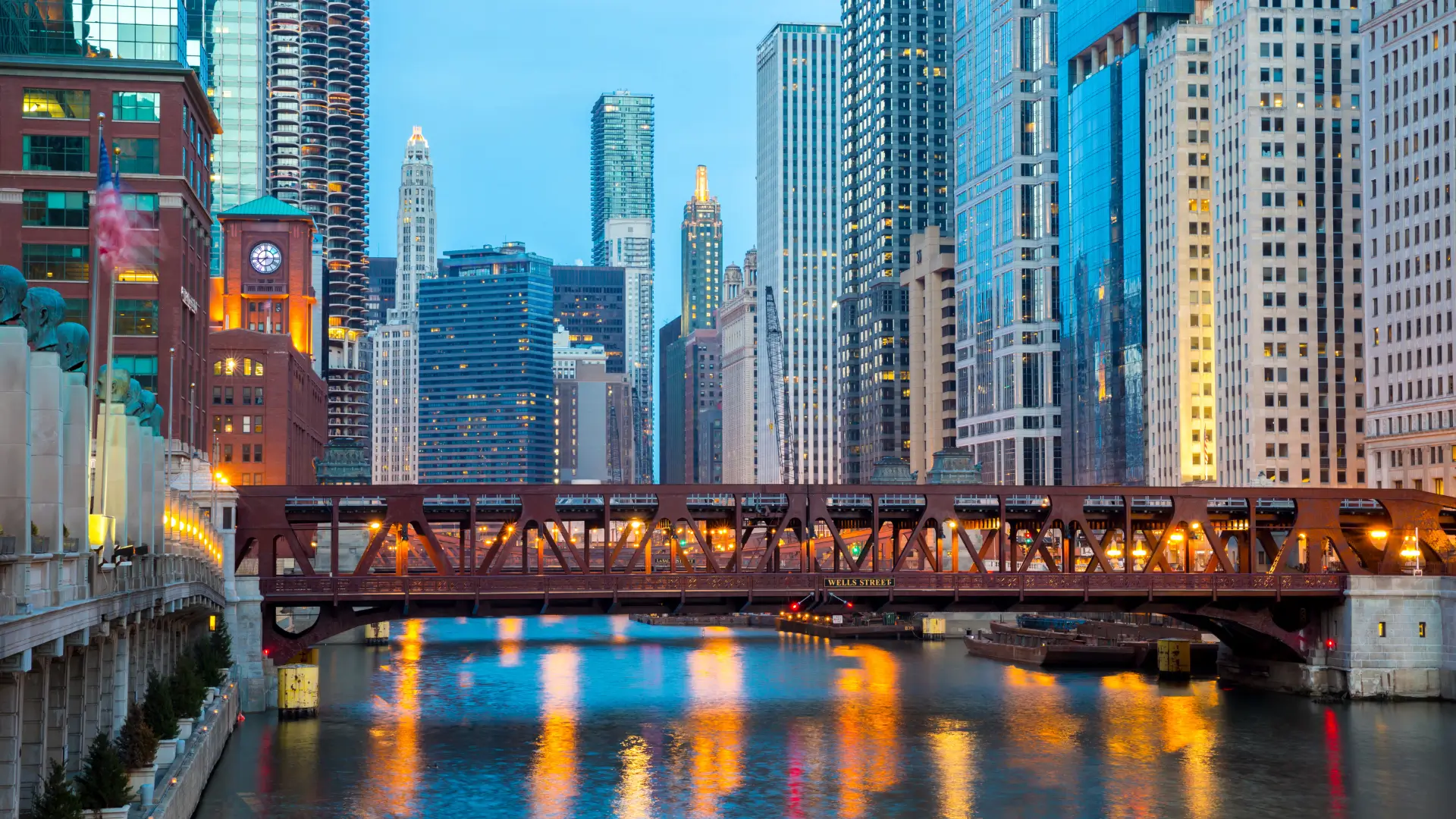
In the heart of the vast American Midwest, along the southwestern shore of Lake Michigan, lies a bustling metropolis known for its towering skyscrapers, vibrant arts scene, and deep-dish pizza. But how did this dynamic city come to be called Chicago? The story of Chicago’s name is a rich tapestry woven with the threads of indigenous history, French exploration, and the early American frontier. Let’s journey back in time to explore the origins of Chicago and meet the characters who played pivotal roles in its naming.
Long before European explorers set foot on the land that would become Chicago, it was inhabited by the Potawatomi people. They called the area “Shikaakwa,” which means “wild onion” or “wild garlic” in their language. The region was abundant with these plants, which grew profusely along the riverbanks and in the marshes. The Potawatomi used the wild onions not only as a food source but also for medicinal purposes.
Our story introduces the first European character, the French explorer Robert de La Salle. In the late 17th century, La Salle set out to explore the interior of North America, driven by dreams of expanding the French empire and discovering a navigable route to the Pacific Ocean. Alongside him was his trusted lieutenant, Henri de Tonti, a seasoned explorer known for his resilience and leadership.
In 1682, La Salle and Tonti reached the mouth of the Mississippi River, claiming the vast territory for France and naming it Louisiana. They continued to explore the region, and their travels brought them to the shores of Lake Michigan and the Chicago River. Here, they encountered the Potawatomi people and learned about the area they called “Shikaakwa.”
Another important character in our tale is Jean Baptiste Point du Sable, often regarded as the “Founder of Chicago.” Du Sable, of African and French descent, arrived in the area in the late 18th century. He established a successful trading post at the mouth of the Chicago River, fostering good relations with the local Native American tribes and European traders.
Du Sable’s trading post became a crucial hub for commerce in the region, and his presence laid the foundation for the future growth of Chicago. His multicultural background and entrepreneurial spirit were instrumental in shaping the early settlement.
As more French explorers and traders passed through the area, the name “Shikaakwa” gradually evolved into “Chicagou” in French. The French adapted the indigenous name to fit their language, and the name stuck. By the time the United States acquired the territory through the Treaty of Paris in 1783, the name “Chicago” was already in common use.
The final character in our story is John Kinzie, a fur trader who settled in Chicago in the early 19th century. Kinzie purchased Du Sable’s trading post in 1804, continuing the legacy of commerce and settlement in the area. The trading post grew into a small community, attracting more settlers and traders.
In 1833, the Town of Chicago was officially incorporated, and in 1837, it was granted a city charter. The name “Chicago” had firmly taken root, a testament to the land’s indigenous heritage and the diverse characters who shaped its early history.
The name “Chicago” is a living reminder of the city’s rich and varied history. From the Potawatomi people who first called it “Shikaakwa” to the French explorers who adapted the name and the traders who established its early foundations, the story of Chicago’s name is a captivating journey through time. Each character, with their unique backgrounds and contributions, played a crucial role in the creation of the city we know today.
In the annals of engineering marvels, few stories capture the imagination quite like the reversal of the Chicago River. This audacious feat, aimed at protecting the city’s drinking water and transforming its environmental landscape, is a tale of visionary leaders, relentless challenges, and groundbreaking ingenuity. Let’s embark on a journey through time to understand how […]

In the heart of the American Midwest, where the Chicago River meets Lake Michigan, lies a city of towering skyscrapers, bustling streets, and diverse neighborhoods. Chicago, known as the “Windy City,” rose from humble beginnings to become one of the largest and most influential cities in the United States. The story of Chicago’s growth is […]
In the heart of the vast American Midwest, along the southwestern shore of Lake Michigan, lies a bustling metropolis known for its towering skyscrapers, vibrant arts scene, and deep-dish pizza. But how did this dynamic city come to be called Chicago? The story of Chicago’s name is a rich tapestry woven with the threads of […]
No results available
In the annals of engineering marvels, few stories capture the imagination quite like the reversal of the Chicago River. This audacious feat, aimed at protecting the city’s drinking water and transforming its environmental landscape, is a tale of visionary leaders, relentless challenges, and groundbreaking ingenuity. Let’s embark on a journey through time to understand how […]
In the heart of the American Midwest, where the Chicago River meets Lake Michigan, lies a city of towering skyscrapers, bustling streets, and diverse neighborhoods. Chicago, known as the “Windy City,” rose from humble beginnings to become one of the largest and most influential cities in the United States. The story of Chicago’s growth is […]
In the heart of the vast American Midwest, along the southwestern shore of Lake Michigan, lies a bustling metropolis known for its towering skyscrapers, vibrant arts scene, and deep-dish pizza. But how did this dynamic city come to be called Chicago? The story of Chicago’s name is a rich tapestry woven with the threads of […]
No results available

